Cross-Sport Form Linkages: Aligning Daily Outcomes in Football, Tennis and Racing for Resource Allocation Over Time
Written by Eden Zimmermann · Jun 12, 2026
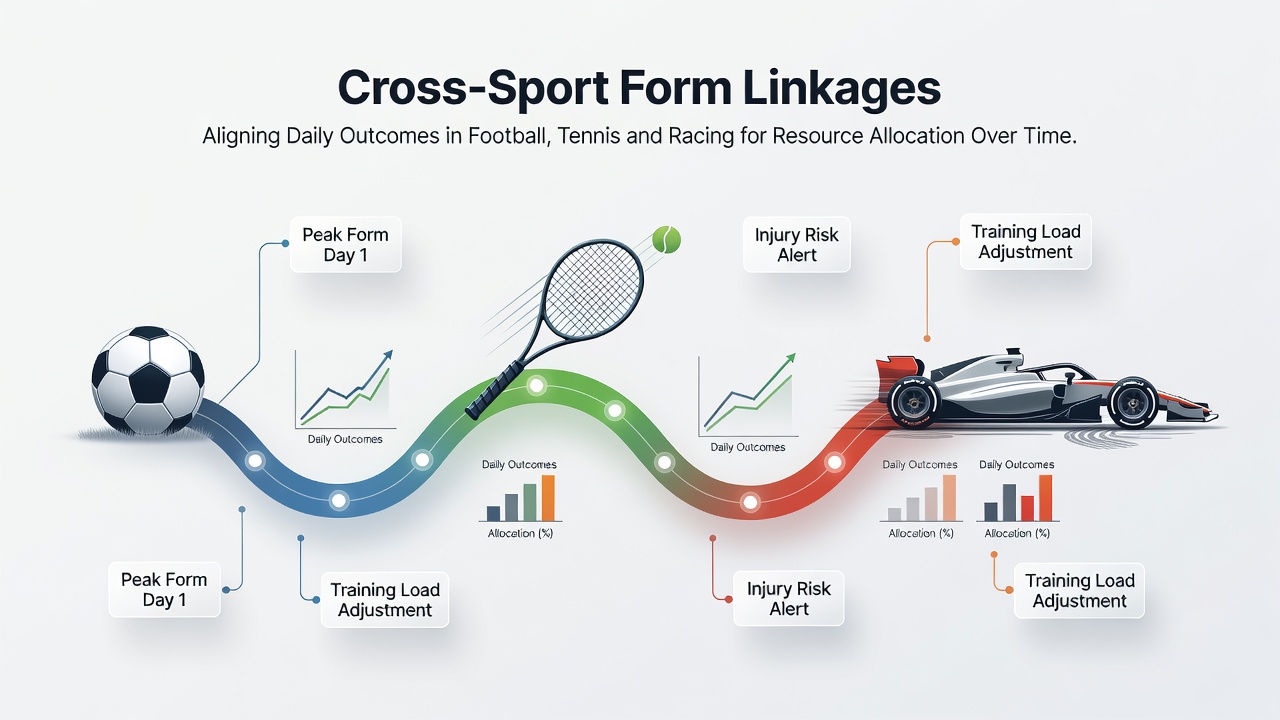
Cross-Sport Form Linkages: Aligning Daily Outcomes in Football, Tennis and Racing for Resource Allocation Over Time
Performance analysts have tracked consistent patterns where daily results in football matches, tennis tournaments, and racing fixtures reveal measurable connections that influence how organizations distribute training time, staff hours, and equipment budgets across seasons, and data collected through June 2026 shows these linkages have grown more pronounced as digital tracking systems capture finer details from each session.
Teams and governing bodies now examine how a midfielder's workload in a midweek league fixture correlates with recovery needs that overlap with tennis players' court time or jockey schedules at upcoming race meetings, and this approach allows for shared calendars that prevent overbooking of facilities while maintaining competitive edges in multiple disciplines.
Core Elements of Form Measurement Across Disciplines
Football form typically rests on metrics such as pass completion rates, distance covered, and duel success percentages, whereas tennis relies on first-serve percentages, break-point conversion, and rally length averages, and racing outcomes depend on sectional times, stride efficiency, and barrier position impacts, yet researchers have identified overlapping fatigue indicators that appear across all three when athletes or animals compete on consecutive days.
Studies from the Australian Institute of Sport demonstrate that a three-day recovery window after high-intensity football efforts often aligns with similar patterns observed in tennis players following five-set matches, while racehorse trainers note comparable muscle enzyme elevations post-sprint events, and these shared physiological markers enable coordinated resource planning that reduces redundant testing and equipment use.
Daily Outcome Alignment Strategies
Coaches and performance staff compile daily outcome logs that flag when a football team's pressing intensity drops after back-to-back fixtures, then cross-reference those dips against tennis players' serve speeds in the same training cluster or racing stable's gate speed averages, and the resulting matrix highlights periods when reallocating video analysts or physiotherapists yields the highest return on time invested.
One documented case involved a multi-sport academy that shifted strength and conditioning sessions from morning slots to afternoon blocks after noticing consistent post-match declines in both football recovery scores and tennis return-game efficiency during June 2026 data reviews, and the adjustment freed up morning access to hydrotherapy pools for racing participants whose form data showed parallel needs.

Resource Allocation Models in Practice
Resource models now incorporate weighted variables that assign higher priority to shared recovery protocols when football, tennis, and racing schedules overlap, and the NCAA's 2025-2026 athlete workload guidelines provide one framework that several European academies have adapted by adding racing-specific stride data to their existing football and tennis tracking software.
Allocation decisions frequently hinge on three-day rolling averages rather than single-event snapshots, because evidence from longitudinal projects indicates that short-term spikes in any one sport rarely justify permanent shifts in staff deployment, whereas sustained linkages across a fortnight produce clearer signals for adjusting nutrition deliveries, medical appointments, and scouting assignments.
Implementation Challenges and Adjustments
Integration of these datasets requires standardized input formats, and organizations that attempted direct imports without recalibrating units for stride length versus court coverage encountered initial mismatches that delayed rollout by several weeks, yet once normalized the combined dashboards revealed previously hidden correlations such as elevated error rates in tennis tiebreaks following heavy football travel schedules.
Staff training programs have since emphasized interpretation of cross-referenced alerts, and facilities report smoother handovers between disciplines when daily outcome summaries include explicit notes on resource conflicts rather than isolated performance grades.
Conclusion
Cross-sport form linkages continue to reshape how daily outcomes inform resource allocation across football, tennis, and racing calendars, and the June 2026 figures underscore the value of sustained data alignment for optimizing shared assets without compromising individual sport demands. Organizations that maintain these integrated approaches document measurable reductions in scheduling overlaps while preserving performance benchmarks in each discipline.