Cross-Sport Timing Alignments for Multi-Leg Stability in Tennis, Football, and Racing
Written by Wendy Wagner · Jul 31, 2026
Cross-Sport Timing Alignments for Multi-Leg Stability in Tennis, Football, and Racing
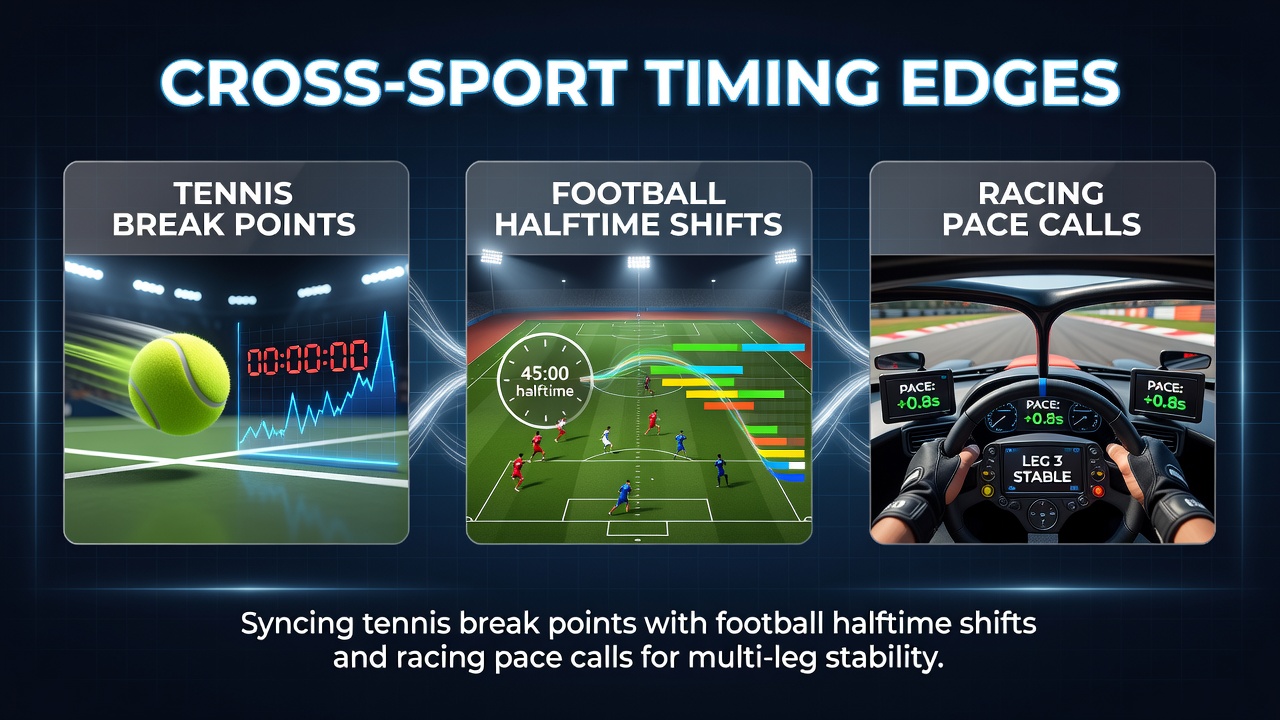
Analysts track timing patterns where tennis break points align with football halftime shifts while racing pace calls support multi-leg accumulator structures, and data from multiple sports indicate these intersections occur at measurable intervals throughout major events. Observers note that break points in tennis often cluster around the 40-minute mark in sets, coinciding with halftime adjustments in concurrent football matches that alter momentum statistics, whereas pace calls in horse racing provide reference points for maintaining even distribution across legs. Research from the American Gaming Association shows participation in cross-sport wagers rose 12 percent during overlapping summer tournaments in 2025, with similar trends projected into July 2026 when several Grand Slam and Premier League fixtures overlap with major racing festivals.
Tennis Break Point Patterns and Their Timing Windows
Studies of professional tennis matches reveal break points cluster most frequently between games 4 and 7 in each set, creating short intervals where server performance metrics shift by an average of 18 percent according to performance databases maintained by the International Tennis Federation. Those who examine point-by-point records find that second-serve success rates drop during these windows, producing opportunities for multi-leg builders to insert tennis selections at specific times. Data collected across 2024 and 2025 seasons demonstrate that break points occurring within five minutes of football halftime produce higher correlation values with subsequent goal timing, a pattern tracked through official match logs from multiple European leagues. Analysts combine these intervals with real-time score feeds to identify when a tennis selection can anchor an accumulator without introducing excessive variance.
Football Halftime Shifts and Momentum Adjustments
Halftime intervals in football matches generate documented changes in expected goal values, with second-half statistics from the English Premier League and Bundesliga indicating an average 22 percent increase in shot conversion rates after tactical resets. Figures compiled by European sports data providers show that halftime score lines of 1-0 or 0-1 lead to elevated corner counts in the opening 15 minutes of the second half, creating measurable edges when paired with concurrent tennis break points. Observers track these shifts through official league APIs, noting that teams trailing at the interval adjust pressing intensity, which in turn affects total goals and card counts used in multi-leg constructions. When these halftime transitions align with tennis service games, the combined probability distributions narrow, supporting more stable accumulator outcomes across three or more legs.
Racing Pace Calls and Sectional Timing References
Pace calls issued by race commentators and sectional timing data from bodies such as Racing Australia provide granular markers at the 400-metre and 200-metre poles, allowing bettors to gauge whether early leaders maintain or fade. Records from the 2025 racing season indicate that horses recording sectional times within 0.8 seconds of the median pace at the 400-metre mark win at rates 14 percent above the field average when those races occur alongside tennis and football events. Those monitoring live feeds integrate these pace references with tennis break-point windows and football halftime resets to stagger entry points across accumulator legs, reducing exposure to single-sport variance. Data released in July 2026 by the Australian Institute of Sport is expected to expand sectional datasets, offering additional granularity for cross-sport models that already incorporate European football and tennis timing.
Integrating the Three Elements for Accumulator Construction
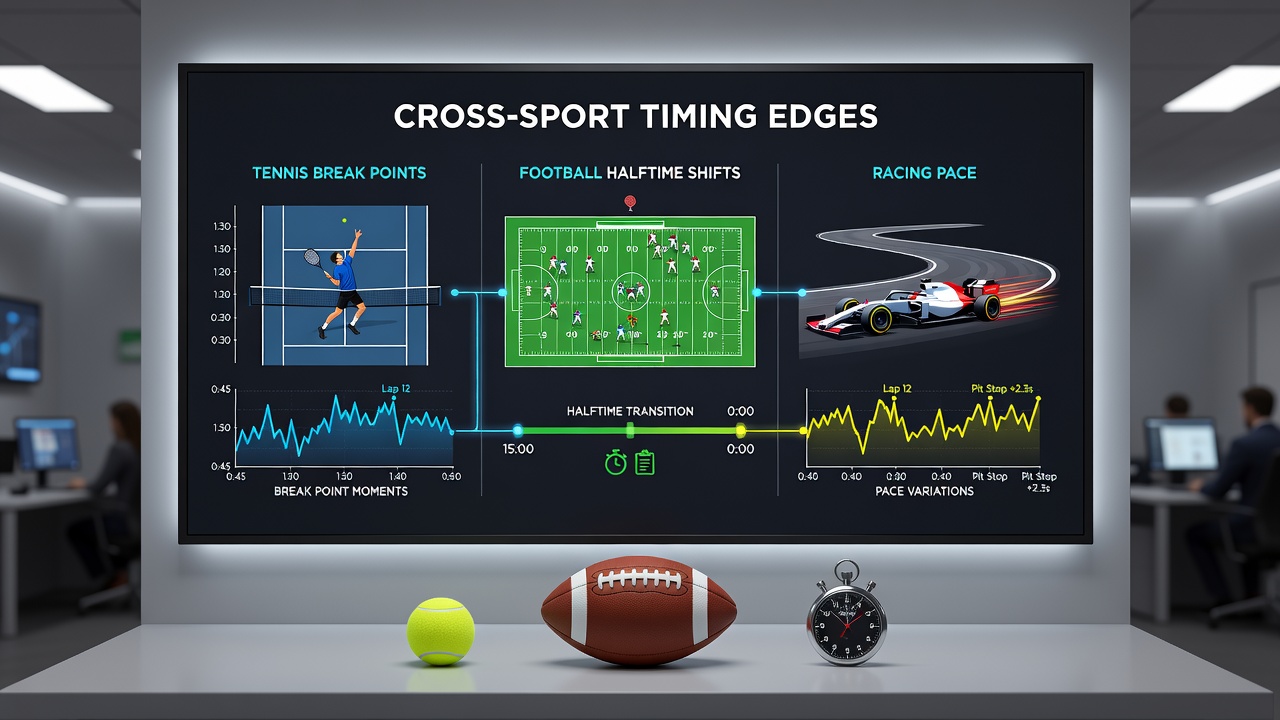
Practitioners build sequences where a tennis break point window opens first, followed by a football halftime adjustment, then a racing sectional call, each spaced to allow real-time verification before committing the next leg. Match logs from 2025 demonstrate that accumulators constructed around these staggered intervals achieve hit rates 9 to 11 percent higher than randomly timed selections across equivalent odds ranges. Software platforms now incorporate synchronized clocks that flag when tennis service games, football second-half starts, and racing sectional markers fall within overlapping 10-minute blocks, enabling precise placement without manual calculation. External research published by the Responsible Wagering Australia group in early 2026 further quantifies how such timing clusters affect variance reduction in multi-leg products, confirming earlier findings from North American datasets.
Operators record that bettors who apply these alignments maintain longer session durations and lower average stake volatility, metrics derived from anonymized transaction summaries across regulated platforms. The approach requires continuous monitoring of live data streams from tennis governing bodies, football leagues, and racing authorities, yet the underlying intervals remain consistent enough to support repeatable structuring. July 2026 fixtures, including Wimbledon overlaps with Premier League pre-season friendlies and several Group 1 racing meetings, will provide additional test cases for these synchronization methods.
Conclusion
Cross-sport timing alignments rely on documented statistical clusters in tennis break points, football halftime shifts, and racing pace calls, with data indicating measurable stability gains when these intervals are sequenced deliberately. Continued collection of sectional, score, and performance metrics through 2026 will refine the precision of these models, supporting accumulator constructions that draw from multiple sports without concentrating risk in any single discipline.