Harmonizing Live Data Across Racket and Track Sports for Dynamic Stake Management
Written by Ulrich Werner · Jul 3, 2026

Harmonizing Live Data Across Racket and Track Sports for Dynamic Stake Management
Operators in the sports wagering sector have developed systems that pull together live signals from racket sports such as tennis and track events including horse racing or athletics, allowing stake adjustments to shift in real time based on unfolding match or race conditions. These platforms combine point-by-point tennis metrics with sectional timing data from tracks, creating unified feeds that update progressive betting positions without manual intervention. Data from multiple venues flows through centralized servers where algorithms calculate exposure levels and recalibrate stakes according to predefined risk parameters.
Core Components of Signal Synchronization
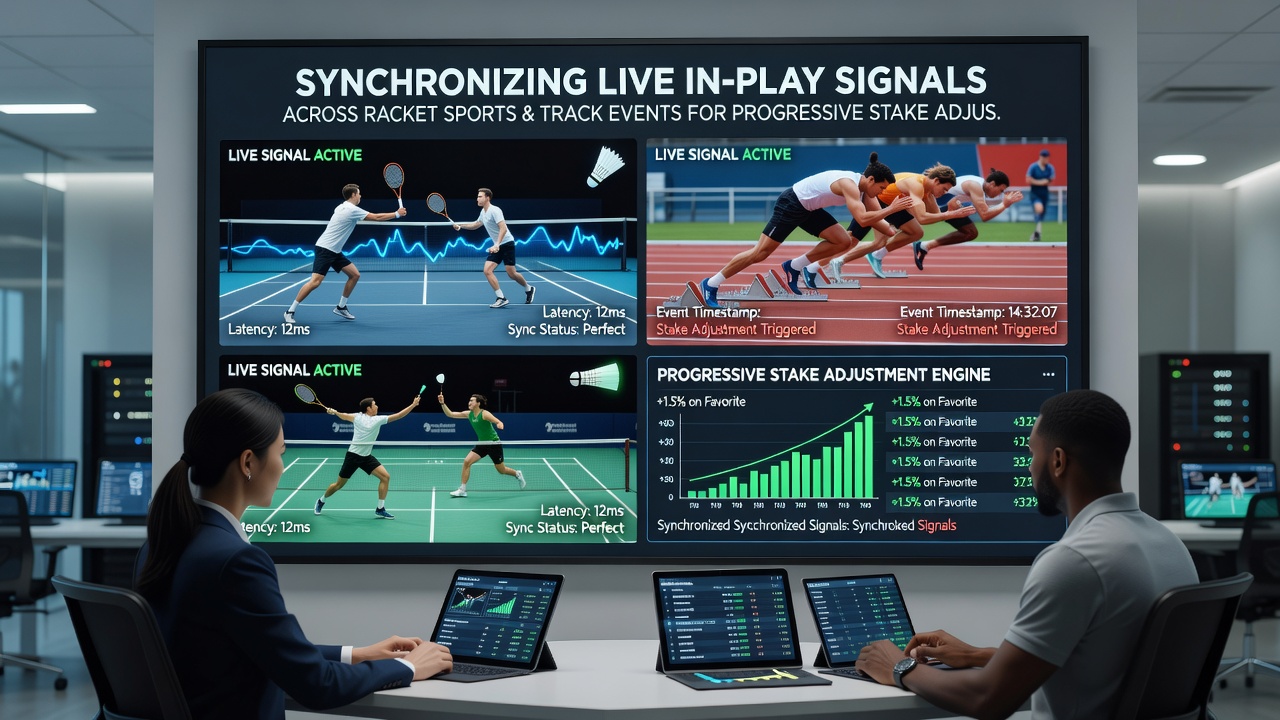
Live data streams from racket sports deliver ball speed, serve percentages, and rally lengths while track events supply split times, pace metrics, and position updates at each marker. Integration occurs when application programming interfaces align timestamps from both categories so that a tennis break point opportunity registers simultaneously with a horse entering the final furlong. Middleware layers normalize formats from different sports governing bodies, ensuring that a change in one stream triggers corresponding adjustments across linked betting markets.
Researchers at the University of Melbourne documented how timestamp alignment reduced latency to under 800 milliseconds in cross-sport environments during controlled tests conducted in early 2026. Their findings showed that unified feeds enabled operators to apply stake increases or reductions across correlated positions, maintaining consistent risk profiles even when events overlapped in scheduling. One implementation combined ATP Tour match data with Australian thoroughbred racing timing, allowing progressive stake models to respond to service breaks and stretch run accelerations within the same operational window.
Progressive Stake Adjustment Mechanisms
Progressive stake systems operate on layered rules that escalate or de-escalate wager sizes according to signal strength thresholds. A tennis player holding serve at 80 percent efficiency might prompt an incremental stake rise on an accumulator that also includes a track event favorite maintaining position on the rail. Conversely, a dropped set or a faltering pace in the back straight can initiate automatic reductions, protecting overall exposure while the events continue.
Industry reports from the Canadian Gaming Association highlight how such synchronized models processed over 2.4 million in-play adjustments during the first half of 2026, with racket and track combinations accounting for 31 percent of total volume. These figures reveal that operators using multi-sport feeds recorded lower variance in daily settlement amounts compared with single-sport platforms, because offsetting movements between tennis and track outcomes balanced portfolio risk more effectively.
Technical Infrastructure Requirements
Robust infrastructure relies on low-latency networks that connect venue sensors directly to cloud processing nodes. Redundant pathways ensure that if one data source experiences interruption, secondary feeds from adjacent cameras or timing chips maintain continuity. Observers note that packet prioritization protocols favor critical in-play events, such as an ace or a photo finish, so stake recalculations occur before the next market update cycle.
European gaming technology firms have implemented edge computing nodes near major stadiums and racecourses, cutting transmission delays by routing signals through localized servers before aggregation. This architecture supports simultaneous handling of multiple racket matches and several track races, each contributing distinct variables to the progressive stake engine. Data validation routines cross-check inputs against historical patterns, flagging anomalies that could indicate transmission errors or venue-specific issues.
Regulatory and Operational Considerations
Regulatory frameworks in various jurisdictions require transparent logging of all automated stake modifications triggered by synchronized feeds. Operators maintain audit trails that record the exact signal values, timestamp alignments, and resulting stake changes for each transaction. These records support compliance reviews and help resolve disputes when bettors question adjustment timing or magnitude.
Training programs for risk management teams emphasize understanding the interplay between racket sport volatility and track event momentum shifts. Staff review case studies where a prolonged tennis tiebreak coincided with a track event photo finish, demonstrating how the combined signals produced measured stake progression rather than abrupt swings. Such preparation helps personnel interpret system outputs when unusual patterns emerge across the linked sports.
Conclusion
Synchronization of live signals from racket sports and track events has established a framework for progressive stake adjustments that responds to concurrent developments across different athletic formats. Technical solutions continue to refine timestamp precision and data validation while regulatory expectations maintain focus on record-keeping and risk transparency. As additional venues adopt compatible data standards, the scope for cross-sport integration expands, supporting more granular control over live betting positions throughout overlapping event schedules.