Merging Halftime Leads and Set Break Patterns: Approaches to Robust Multi-Sport Parlays
Written by Ulrich Werner · Jul 28, 2026

Merging Halftime Leads and Set Break Patterns: Approaches to Robust Multi-Sport Parlays
Multi-sport parlays draw from distinct athletic disciplines where halftime leads in football intersect with service break trends in tennis to form layered betting structures, and analysts track these elements through aggregated performance data released across international markets. Observers note that teams securing halftime advantages in major leagues maintain elevated win rates in the second half, while tennis players who convert break points at higher frequencies during deciding sets alter match trajectories in measurable ways.
Halftime Lead Data in Football Contexts
Football matches generate halftime statistics that reveal patterns across domestic and international competitions, with records showing that squads ahead at the interval convert those positions into full-time victories at rates exceeding 60 percent in several top European divisions during the 2025-2026 season. Researchers compile these figures from match logs and distribute them through league databases, allowing bettors to identify squads with consistent second-half momentum. Data from July 2026 updates indicate stable trends in leagues where defensive setups limit comebacks after the break.
Tennis Set Break Conversion Rates
Tennis statistics highlight service break percentages that fluctuate by surface and tournament round, with players achieving break rates above 35 percent in deciding sets demonstrating measurable edges in extended contests. Studies from academic sports analytics programs track these conversions across Grand Slam events and ATP tours, revealing correlations between break point opportunities and overall match outcomes. Those who monitor return game efficiency often cross-reference player head-to-head records to isolate situations where one competitor consistently exploits opponent serve vulnerabilities.
Combining Elements into Multi-Sport Structures
Parlay construction links a football halftime lead selection with a tennis break trend pick when both occur within overlapping event windows, creating accumulators that require sequential validation across sports. Operators record participation in these combined wagers through transaction volumes, and figures reveal growth in such products during periods when major football fixtures and tennis tournaments coincide. One documented approach involves anchoring selections on high-probability halftime leads from midweek league games before appending tennis matches scheduled for the same evening sessions.
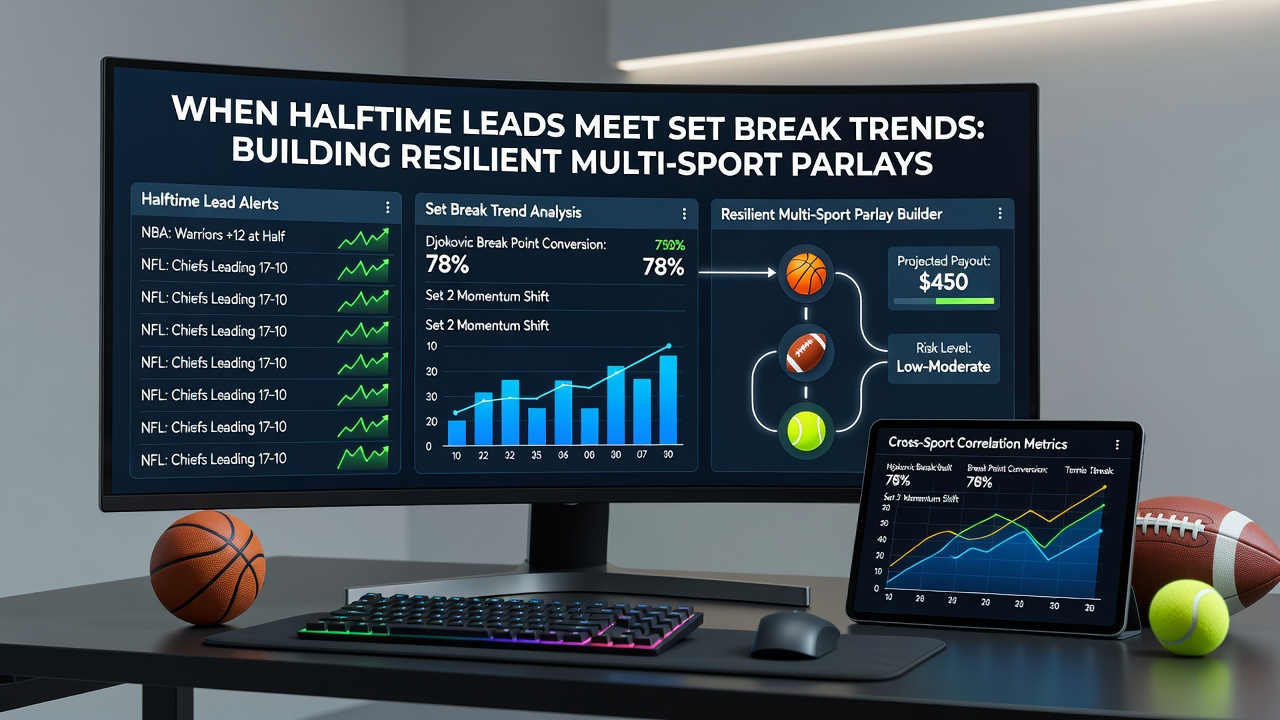
Systems integrate these components by applying filters that require both the football side to hold its interval advantage and the tennis side to secure at least one break per set in targeted encounters. External data sources such as Responsible Gambling Council reports provide baseline participation metrics that operators reference when structuring these products for wider audiences. Another reference point appears in analyses from the Australian Gambling Research Centre, which examines cross-sport wagering patterns in regulated environments.
Resilience Factors in Accumulator Design
Resilient parlays incorporate redundancy through multiple validation points, such as requiring both teams and players to meet secondary statistical thresholds beyond the primary halftime or break conditions. Market records demonstrate that accumulators built with three or more cross-checked criteria exhibit lower variance in settlement outcomes compared with single-sport versions. Practitioners adjust stake allocations according to historical conversion data, spreading exposure across several such combinations rather than concentrating on isolated high-odds lines.
Observed Patterns in July 2026 Events
July 2026 schedules featured overlapping football pre-season tournaments and tennis hard-court swings, producing datasets where halftime lead persistence aligned with elevated break rates in evening sessions. Tracking services logged increased volumes in multi-sport tickets during these windows, with settlement patterns confirming that selections meeting both criteria cleared at frequencies consistent with prior seasons. Observers attribute part of this activity to improved data feeds that deliver real-time updates on interval scores and return statistics simultaneously.
Conclusion
Multi-sport parlay frameworks that merge football halftime leads with tennis set break trends rely on verifiable performance metrics drawn from league and tour records, and continued data releases support ongoing refinement of selection criteria. Operators and participants alike reference aggregated statistics to calibrate these structures, maintaining focus on documented conversion rates across the combined disciplines.