Synchronizing Pre-Match Evaluations with Dynamic In-Play Adjustments for Multi-Sport Betting Balance
Written by Wendy Wagner · Aug 18, 2026
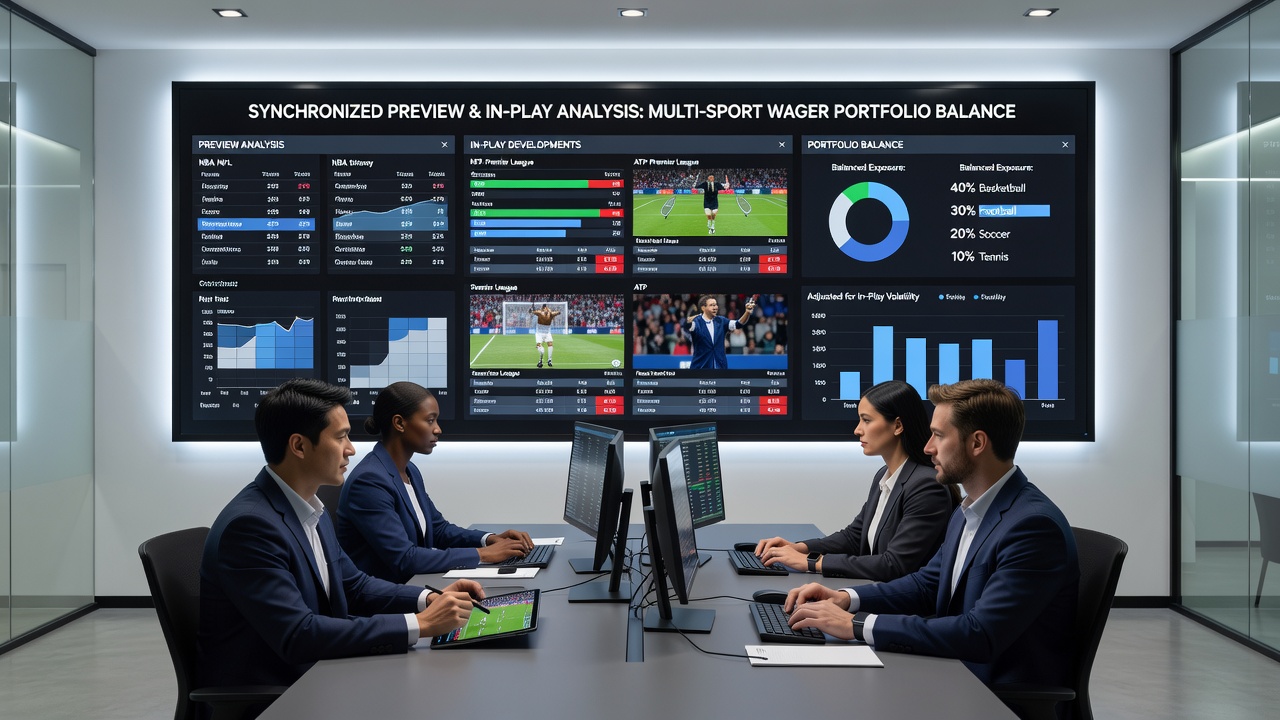
Synchronizing Pre-Match Evaluations with Dynamic In-Play Adjustments for Multi-Sport Betting Balance
Analysts track how initial forecasts drawn from team statistics, player conditions, and historical trends connect directly to unfolding events during matches, races, and sets, and this process supports adjustments across several sports at once. Observers note that portfolios spanning football, tennis, and horse racing require constant alignment between the two layers of information so that exposure stays even when one market shifts rapidly.
Building the Foundation Through Preview Layers
Pre-match evaluations compile data on form guides, head-to-head records, weather influences, and lineup changes, while researchers compile these elements into probability models that set baseline expectations for each selection. Data from the American Gaming Association shows participation in multi-sport approaches grew steadily through early 2026, and this growth coincided with wider availability of detailed statistical feeds. Those who maintain such models update inputs regularly because small revisions in starting assumptions can alter later decisions once live information arrives.
Monitoring Live Developments Across Venues
In-play streams deliver real-time metrics such as possession percentages, serve percentages, and sectional timings, and these figures often diverge from preview projections within the first few minutes of action. Bettors who follow multiple events simultaneously watch for patterns like momentum swings in tennis sets or pace changes on the track, then compare those observations against original estimates. August 2026 schedules included overlapping European football fixtures with North American tennis tournaments and Australian winter racing meetings, which created frequent opportunities for cross-checking live data streams against pre-set thresholds.
Methods for Aligning the Two Information Streams
Systems that combine preview outputs with live inputs use conditional triggers, for instance reducing stake sizes on a football selection when expected goal metrics fall below a defined level early in the match. Similar rules apply in tennis when first-serve percentages drop or in horse racing when early sectional times indicate a pace bias that favors certain runners. Software platforms allow users to set alerts that highlight discrepancies, and operators report higher retention among those who activate such features because the alerts reduce the need for constant manual oversight. Experts at the European Gaming and Betting Association documented increased use of integrated dashboards during the same period, noting that these tools help users maintain portfolio balance when several events run concurrently.

Portfolio Construction Across Different Sports
Balanced allocations often spread risk by pairing selections with opposing volatility profiles, such as pairing a high-variance tennis set outcome with a steadier each-way horse racing position. Synchronization enters here because an early break of serve can prompt reallocation toward the remaining football or racing markets that still align with original preview parameters. Observers record that participants who review both data layers at fixed intervals, rather than only at the start or end of events, tend to record fewer large drawdowns over multi-week periods. Research indicates that August 2026 saw elevated volumes in such mixed portfolios during major summer tournaments, where overlapping schedules amplified the value of timely cross-referencing.
Practical Examples from Recent Schedules
One documented sequence involved a preview that favored an underdog in a tennis quarter-final based on surface statistics, yet live tracking revealed an unexpected rise in unforced errors after the first set; the adjustment involved shifting exposure to an ongoing football match whose preview metrics remained intact. Another case tracked early pace figures in a Group race that contradicted form-book expectations, prompting a move into a later tennis match whose live serve data continued to support the initial model. These examples illustrate how synchronization operates at the level of individual selections rather than entire sports categories.
Conclusion
Effective coordination between preview analysis and in-play developments rests on consistent data feeds, clear trigger rules, and regular portfolio reviews that account for events across multiple disciplines. Figures from industry sources confirm rising adoption of tools that facilitate this coordination, particularly during periods of dense scheduling such as August 2026. Those who apply structured alignment methods maintain clearer oversight of overall exposure while responding to developments as they occur on the field, court, or track.